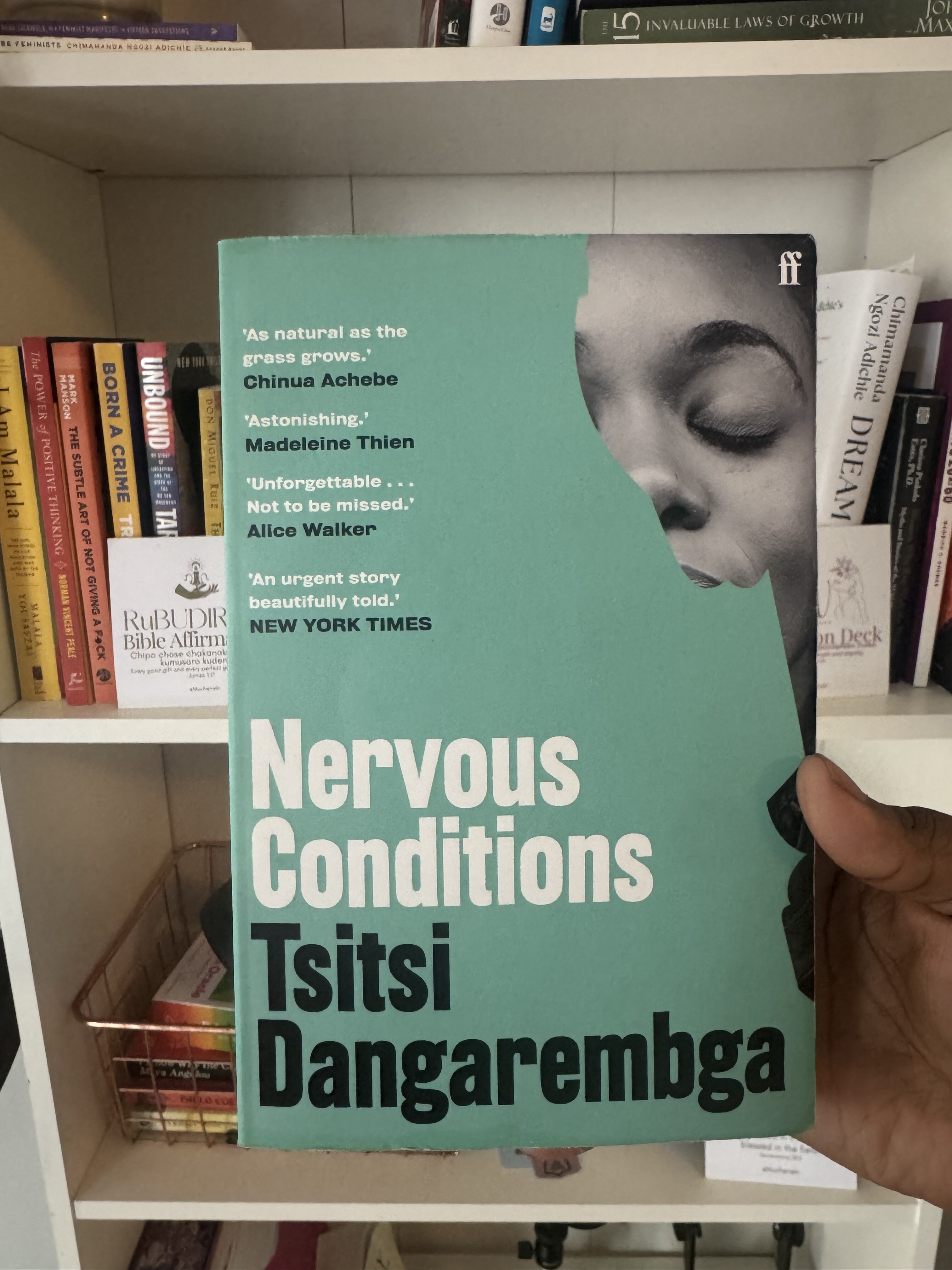
This SOWReads is taken from “Nervous Conditions” by Tsitsi Dangarembga. The book follows Tambudzai, a young girl in colonial Rhodesia, as she fights for her education and identity. It reveals the quiet battles between family, culture, and self-worth. This novel is a reminder that reclaiming our voice is deep spiritual work.
Book Title: "Nervous Conditions" by Tsitsi Dangarembga
Memorable quote: “I was not sorry when my brother died.” This bold opener grips you with mixed feelings, inviting you into Tambudzai’s world of buried truths and quiet rebellions. Don’t worry — the book gently takes us back to where this thought comes from, helping us understand the pain and power behind her words.
The book is set in early colonial times, when Zimbabwe was still known as Rhodesia. We’re taken deep into village life, where people bathe and wash their clothes in the river — a life in quiet harmony with the earth, in the way they grow their food and handle daily tasks. It gives you a glimpse of the rich culture of Zimbabwe before many people moved to the cities.
Through Tambudzai (the main character), we witness how migration for education and “progress” begins. She shares her journey of moving to a mission school for a better chance at life, after having to sell her own maize to pay tuition before she even turned thirteen — a determined young girl wanting the same right to education as her older brother, who later passes away unexpectedly.
We’re drawn into the family dynamics of the time: the father as the unquestioned head of the house, making all the decisions. The status quo is challenged when a daughter like Tambu dares to question her father and speak up when things don’t make sense. What I took away from this book is just how far women’s rights have come — from girls being valued only for marriage and the cows they’d bring, to women becoming breadwinners and leaders in their homes. And at its heart, Nervous Conditions also reminds us of the quiet but powerful bond of sisterhood between Tambu and her cousin Nyasha, who teach each other what it means to speak up and think for themselves.